

Inside the Venetian Macao: Why a Chinese Casino Resort Has Italian Canals
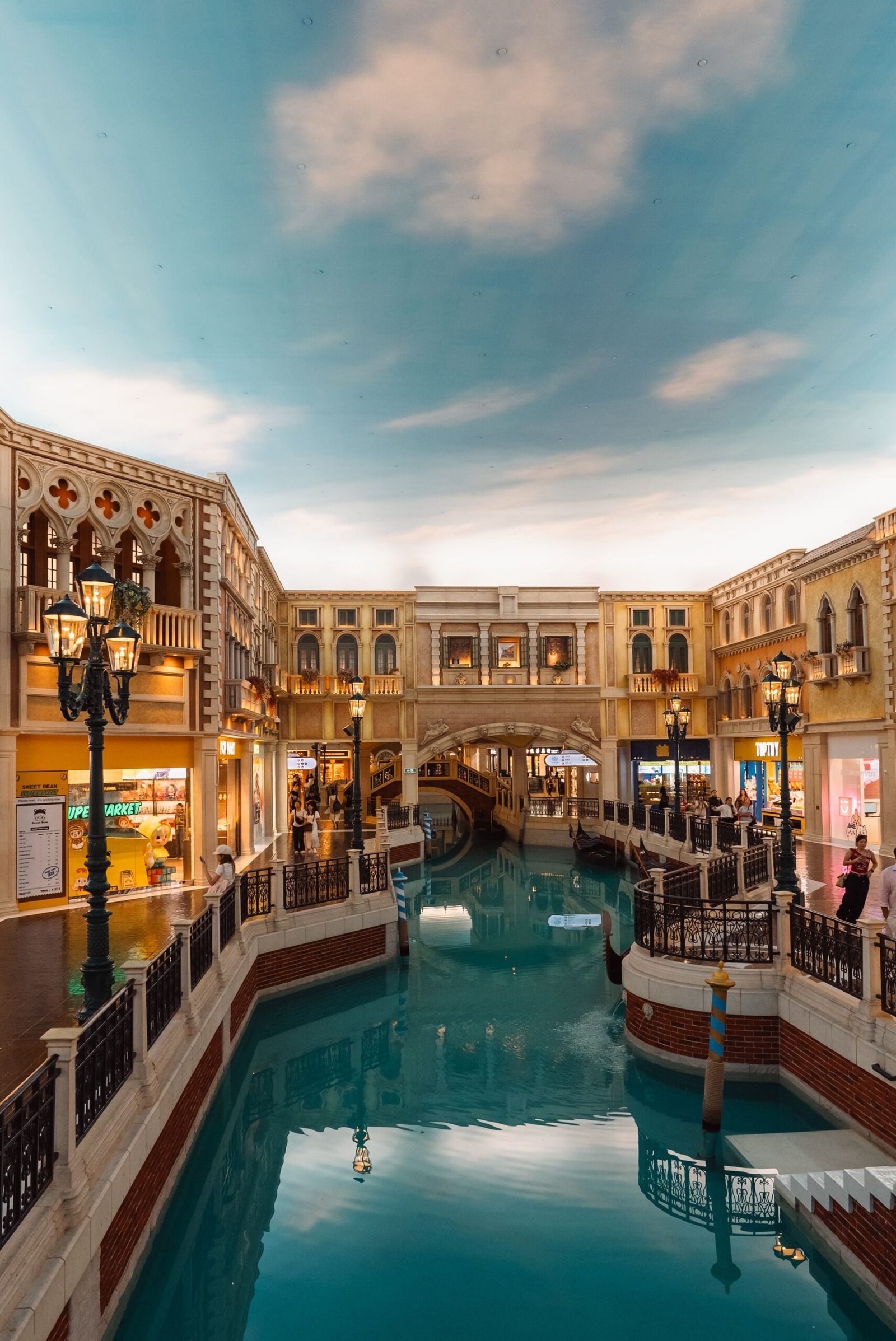
Under a painted sky, a gondolier steers past shoe shops and starts singing. It sounds like Venice until you look up. These canals are indoors, in Macau.
The casino is a different attraction. A guide to the best 50 free spins bonuses compares online promotions, eligible games, and wagering rules, not offers at this resort. You can watch the boats for free.
A honeymoon in Venice started a very expensive idea
The story begins in Las Vegas. Sheldon Adelson and his wife Miriam visited Venice on their honeymoon, and the Italian city gave them an idea for a hotel. Why should visitors have to choose between a romantic canal and an enormous American resort?
In 1999, the first Venetian opened in Las Vegas, complete with gondoliers and recreations of famous landmarks. The builders added shops and convention halls, hoping business visitors would stay for more than a turn at the tables.
Macau offered room to repeat the experiment, but not in the crowded old city. The project moved to Cotai, between the former islands of Taipa and Coloane. Much of the site was reclaimed from the sea. Imagine that: water was removed to make room for imitation canals.
The building project was bigger than the joke
Construction began in 2004. Around 20,000 workers were involved, and land reclamation used six million tonnes of sand. The Venetian Macao opened on August 28, 2007, after a project estimated at about US$2.4 billion before certain land costs.
There were nearly 3,000 hotel suites, a convention complex with roughly 1.2 million square feet of space and a shopping mall big enough to get lost in. Concerts and trade shows were part of the plan from the start. The casino was only one piece of it.
The figures show how much of this place isn’t a hotel room:
- Three indoor canals, each around 390 feet long.
- About one million square feet of retail space, much of it arranged like a Venetian street.
- A theatre with 1,800 seats, alongside a large arena for sports and concerts.
- A 39-floor hotel tower, with suites rather than standard rooms.
Venice itself grew over centuries. This version had a construction deadline.
The clock tower is a clue to how the illusion works
St. Mark’s Square turns up inside the shopping complex, complete with a reproduction clock tower. There are bridges, arches and decorative façades that encourage visitors to keep walking around the next corner. And the weather? An afternoon painted onto the ceiling.
The boats travel along narrow waterways between storefronts. A gondolier can sing while shoppers browse a few steps away. One minute the scene invites you to imagine an Italian holiday. The next, somebody emerges carrying shopping bags and looking for the food court.
Nobody mistakes Cotai for Venice. What makes the place amusing is seeing such an impossible scene work at all. There is a real outdoor lagoon too, which often gets mixed up with the interior canals in photographs. The experience most visitors recognise, with bridges and artificial daylight above the boats, is inside Shoppes at Venetian.
Do you need a gondola ticket to enjoy it?
No. The walkways and bridges are part of the shopping complex. You can see the canals, explore the recreated square and watch a boat go past without purchasing a ride or booking a suite. Handy if you only have an hour in Cotai.
The gondola itself is a paid attraction. Ride times and operating canals can change, so look at the day’s schedule before committing to a particular time. The Grand Canal and Marco Polo Canal are the principal indoor routes used for rides. A ticket pays for the boat, not entry to the mall.
Try looking around on foot before deciding. The view from a bridge is different from the view at water level, and it costs nothing. A gondolier singing past a jewelry shop is entertaining even if you’re standing on dry ground.
The strange part is what happens after the singing stops
The Venetian’s canals are not there to move anyone efficiently. They take passengers on a short loop through scenery built to encourage lingering. Behind that bit of theatre sits a business calculation: people who stay for a concert, an exhibition or a boat ride may also eat, shop or book a room.
Other Cotai resorts followed with their own oversized landmarks and elaborate interiors. Macau’s older streets still offer genuine Portuguese-era buildings, temples, and local bakeries, all outside the resort’s manufactured world.
Take the boat or skip it. The most memorable moment may come when you leave the shopping complex, step into Macau’s actual weather and realise the painted sky was the most reliable thing about the whole Venetian experience.
Discover more from A Wanderful Sole
Subscribe to get the latest posts sent to your email.